Preserving 400 Years of Gossamer Khat Weaving
In the sun-washed town of Kaithun, near Kota, generations of artisan families sit by ground-level pit looms, interlacing superfine cotton and mulberry silk into featherlight gossamer squares.
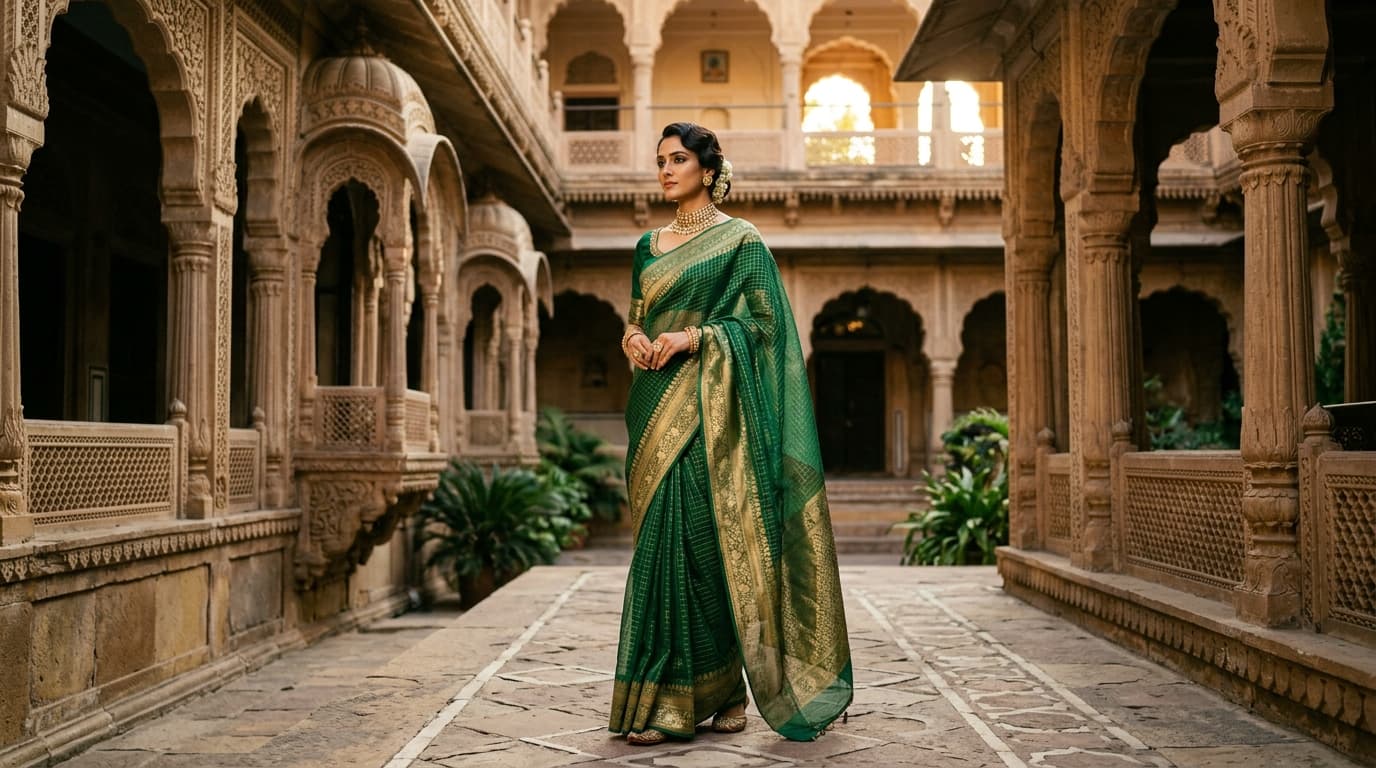
“A fabric so ethereal that when folded, an entire six-yard saree can nestle inside a small lacquered jewel box.”
The Signature 'Khat'
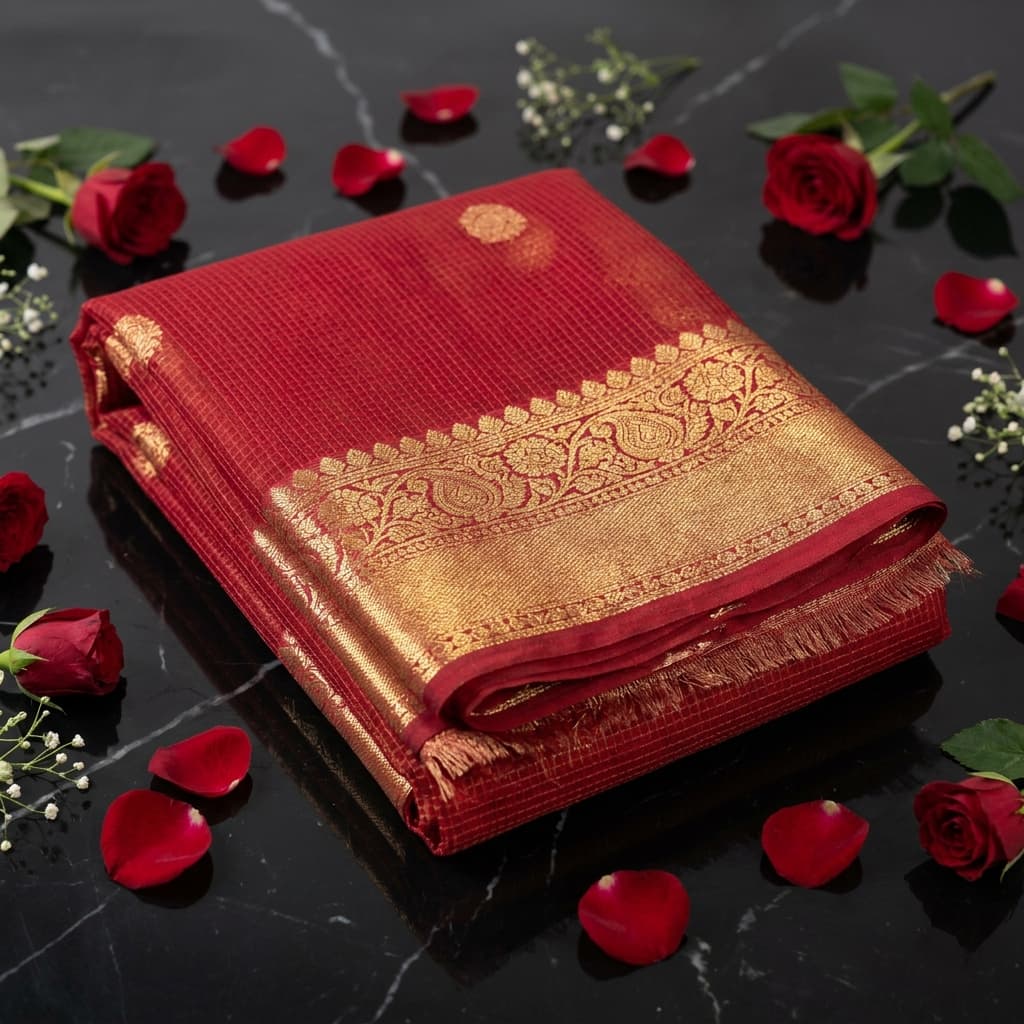
Calculated interspacing of warp and weft creates small checkered transparent grids known as 'khat'. A standard authentic saree contains roughly 300 to 350 khats across its width.
Royal Patronage
Brought from Mysore to Kota in the late 17th century by Rao Kishore Singh, the weave was rechristened 'Kota Doria' and became the royal attire of Rajput maharanis.
Artisan Empowerment
Every purchase through Kota Dori provides fair living wages, medical security, and loom modernizations directly to Kaithun weaver households without middleman commissions.
Three Weeks of Meticulous Handloom Devotion
A single authentic Kota Doria silk saree requires anywhere from 14 to 28 days of uninterrupted pit-loom concentration. The yarns are first hand-polished using wild onion paste and natural rice kanji, conferring the crisp signature stiffness that softens into butter-soft comfort upon first wear.
Real silver and gold zari threads are interlaced by hand alongside the selvedge, using wooden shuttles passed back and forth rhythmically. When you hold a Kota Dori saree against morning sunlight, the checks glow like stained palace glass.